


Nigeria Sliding Toward One-Party Rule and Dictatorship, Warns Mike Ozekhome (SAN).
- Admin
- Jun 7, 2025
- 4 min read
Updated: Jun 9, 2025
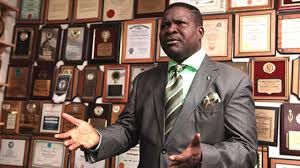
Introduction: Democracy at a Crossroads
In a democracy, diversity of voices and political competition are not luxuries they are the lifeblood of legitimate governance. But in Nigeria’s fragile political landscape, those very fundamentals are under threat.
Mike Ozekhome (SAN), one of Nigeria’s most respected constitutional lawyers and human rights advocates, has issued a stern warning:
“Nigeria is dangerously veering towards a one-party state that could usher in dictatorship.”
His comments, made during a recent interview on Channels Television’s Hard Copy, have struck a national nerve — and ignited a broader conversation on the erosion of political ideology, unchecked power, and the future of Nigerian democracy.
Ozekhome’s Key Points: What He Said and Why It Matters
Ozekhome did not mince words. Here are the major takeaways from his explosive interview:
Political Defections Have Turned Parties into Meaningless Brands He likened the current political scene to “akara, moi-moi, and beans” — different names, same substance. Politicians now defect not out of ideology but pure self-interest.
The Ruling Party Is Consolidating Power Without Effective Opposition The dominance of the All Progressives Congress (APC), coupled with the fragmentation and silence of the opposition, suggests Nigeria is heading toward single-party control.
Institutions Are Being “Pocketed” If the current trend continues, Ozekhome warns, the National Assembly and Judiciary may lose independence — making way for an executive that rules unchecked.
The People Have Become Too Docile He accuses the public of developing a “Stockholm Syndrome”, where citizens identify with their political captors due to prolonged suffering.
2027 Could Be a One-Horse Race With no strong opposition coalition visible on the horizon, the next general election risks being devoid of genuine democratic competition.
What’s Fueling Nigeria’s Drift Toward a One-Party State?
Several interconnected factors are accelerating this shift:
Factor | Description |
Mass Defections | Politicians switch parties with no ideological grounding, often to curry favor or avoid legal scrutiny. |
Weak Institutions | The lack of true independence for INEC, the judiciary, and the legislature reduces checks on executive power. |
Weaponization of Agencies | State security services and anti-graft bodies are often used to target opposition figures selectively. |
Disenfranchised Electorate | Low voter turnout and apathy mean fewer Nigerians are actively involved in democratic decision-making. |
Media Intimidation | Critical voices in traditional and online media face growing harassment and censorship threats. |
Historical Lessons: From PDP to APC
Ozekhome reminded viewers that the People’s Democratic Party (PDP) once boasted it would rule Nigeria for 60 years but lost power after 16.
Now, the APC’s dominance, particularly after the 2023 and 2024 election cycles, echoes that same overconfidence and carries the same risks of abuse.
History teaches that when political competition is replaced with uncontested rule, corruption festers, opposition is criminalized, and public interest becomes secondary to regime survival.
Is Nigeria Already a De Facto One-Party State?
Let’s examine the current reality:
The Presidency, Senate, House of Representatives, and majority of State Governments are all controlled by APC.
Key judicial decisions have repeatedly favored the ruling party.
INEC’s credibility has been severely questioned in recent elections.
Major opposition parties like PDP and Labour Party are plagued by internal divisions, suspensions, and leadership tussles.
In this context, Ozekhome’s warning doesn’t sound alarmist. It sounds prophetic.
What Can Be Done to Save Nigeria’s Democracy?
To prevent Nigeria from slipping into authoritarian rule, experts recommend a multi-layered approach:
Electoral Reform Strengthen INEC’s independence. Deploy real-time results transmission. Ban frivolous defections. Implement campaign finance transparency.
Strengthen Political Parties Parties must develop clear ideological platforms, attract members through merit, and enforce internal democracy.
Civic Education and Voter Mobilization Citizens need to understand that democracy is not just about voting every four years, but about daily engagement and holding leaders accountable.
Free and Independent Media Journalists and commentators like Rufai Oseni and others must be protected to keep truth in the public domain.
Coalition-Building in the Opposition The opposition must drop ego and regionalism and form credible, nationwide coalitions if they are to remain relevant by 2027.
A Call to Citizens: Democracy Is Not Self-Sustaining
Ozekhome’s most sobering point was that Nigerians themselves are enabling dictatorship not through direct support, but through silence, apathy, and inaction.
“Power belongs to you. Not them.”
If the electorate continues to accept rigged systems, support defectors, and treat democracy like a spectator sport, the descent into authoritarianism will not be gradual it will be inevitable.
Final Thoughts: 2025 Is the Fork in the Road
Mike Ozekhome’s words are not just a critique they are a warning and a wake-up call.
Nigeria can either:
Rebuild a pluralistic democracy where multiple parties compete, dissent is protected, and institutions stand strong…
Or slide into a one-party authoritarian system that silences opposition, manipulates justice, and rewards loyalty over merit.
The choice will not be made by the elite alone. It will be made or unmade by every Nigerian.
🖊️ By WorldWire News – Politics & Justice Desk
📣 Do you agree with Mike Ozekhome’s warning? Are we moving toward dictatorship? Drop your comment below or email us at: info@worldwirenews.xyz.


Comments